Showing posts with label gender. Show all posts

Thursday, September 29, 2011

"Capitalism Destroys Us, Movements Heal Us"

"The body had to die,
 so labor power could live"
Silvia Federici 
Caliban and the Witch (141)


I am strongly influenced by Silvia Federici's "Caliban and the Witch." I read that book alongside Maryse Conde's "I, Tituba, Black Witch of Salem." Conde's book is also really amazing, and Federici's historical and theoretical ideas give another layer of meaning to the depth that is already there. I hope to do a more detailed write up of these books sometime down the road.

In the meantime, I want to share a talk that Federici recently gave in Philadelphia, entitled, "Capitalism Destroys Us, Movements Heal Us." The organizer has kindly uploaded the audio recording. Check it out. It's super helpful. I especially like the distinction between "sacrifice" and "suffering." The Buddhist instincts in me really like her acknowledgement and acceptance of aspects of life as suffering.

It's making me think alot about the importance of organization in helping maintain sustainable political lives. The 10% we can offer to political work while also studying, working, caring for family, self care, is small when it is alone. In fact, it becomes a small droplet that gets lost in the midst of a gazillion other things. But when many people pool their 10%, 5% - s together, then our joint (small) forces become bigger and more meaningful political activities.

I have been to meetings where people spend the only 2 hours of the week they have to spare, nearly dozing off because the work is not engaging or meaningful. Being present at a political meeting does not mean we are growing and engaging meaningfully. We need to have organizations that channel the only 2 hours of spare time someone can offer, into meaningful, inspiring, challenging work that helps us grow. For that, we need structure and political content.

We need to build that! Or we won't win against the capitalist scum bags that overwhelm us! We need to build that, so we dont burn out! Also so we won't conflate all forms of "sustainability" with self care that takes us AWAY from political work.  I believe it is possible to be sustainable and be engaged politically. I also do think there is need to take time away sometimes, but that cannot be the only way we conceptualize sustainability.


Monday, June 27, 2011

Biologists, strut your stuff!

If you havent watched the movie, XXY, you need to.

It's an amazing film about a young intersex person navigating their identity, sexuality and gender expression. What's really amazing too is the way there are 2 different visions of science that the movie presents. Mamos and I have been talking through this for a while and it comes through in the comment he leaves on another post.

There is the biodiversity vision of science, one that embraces the multiple, varied, evolving nature of the body, of nature, and society.

Another is a top-down authoritarian, Francis Bacon-style version of science that focuses on hierarchy, perfection and boxes.

Anyway, all this is bringing me to read about biology and gender.
A biology that isn't top down, gender-binaried, fluid, embracing of biodiversity.

So, my dear biologists, here I come:

Whipping Girl: A Transsexual Woman on Sexism and the Scapegoating of Feminity by Julie Serano

Sexing the Body: Gender politics and the construction of sexuality by Anne Fausto Sterling
Myth of Gender: Biological theories about Women and Men by Anne Fausto Sterling

Wednesday, June 22, 2011

Queer Liberation as dialectics (random thoughts!)

2 things

1) Alot of people say queer theory is academic and inaccessible to the working class, and then write it off. However, the distinctions b/w sex, gender and sexuality are important concepts that do indeed also describe the experiences of working class people. I am wary of those who class bait queer theory as a way to not deal with the need for queer liberation within the working class. In fact, this kind of argument fall into the same old economist debates about the working class, that theory is for the academic/middle class, while struggle and "literature for workers" is for the working class. Part of what our project is, is to say we need working class militants and theorists. Queer theory is one of these theories that need to be reclaimed, just like Lenin, Marx, and Gramsci are theories that the working class needs to muster.

2) Ultimately, when theory describes an extremely personal and also social process such as gender, sexuality and sex, what is most important is how people are approaching the discussion, rather than the name-dropping of queer theory. This reminds me of what Michelle O Brien describes in her piece, that the fancy academics and yuppies who name drop about trans and queer theory sometimes turn out to be the most arrogant and pretentious, while those who dont know the jargon, but approach trans and queer peoples' experiences with a genuine desire to learn and understand, are the most valuable allies to have. It is this openness and genuine interest/vulnerability/unguardedness that paved the way for the queer-straight unity in the Welsh Miners Strike. I see one of my tasks as a revolutionary queer worker, to be one that nurtures and facilitates such openness with my coworkers through class struggle.

Queer liberation is a form of dialectical growth. It is not a static category. In the 1970s, Sylvia Rivera, one of the most important and dopest trans liberation activist in recent history, could not be named. As a drag queen, she existed lost in the binary b/w gay and lesbian, straight and gay. Today, as trans historians and activists like Susan Stryker, Leslie Feinberg, Joan Nestle, etc write the distinct narrative of the history of trans liberation, reclaiming Stonewall from middle class gay scenes, calling out the transphobia of the 2nd wave feminists, recognizing the Compton cafe riot as a definitive historical event for trans people, we now see Sylvia Rivera as a definitive figure of trans peoples history. What is unnamed today, is part of a birthing of a new historical, cultural, material experience, that can only be named tomorrow, later, after many pioneers have put their lives down.

My point was...this dialectical unfolding requires an open state of mind. This open state of mind is what Michelle O Brien describes, as the genuine, humbled experience of listening and understanding what another experiences in their relationships to sex, gender and sexuality, how their personal identities form through all our interactions with society, within ourselves etc. It is not born out of name-dropping queer theory jargon or Judith Butler-esque language. That said, note that I am not throwing out the insight that folks like Judith Butler and Foucault have made. Just that their academic theories are not the sole factors in shaping the new category of queer liberation, and should not monopolize queer liberation. We need to emphasize that the personal struggles and search for liberation of many individuals are part of the unfolding of the queer dialectic.

I hope this makes sense.
Toward a free and joyous expression of self!

Monday, June 13, 2011

Random thought on gender

Friends over at Advance the Struggle posted this piece on the Welsh Miners Strike back in the 1980s, and how gay, lesbians and straight workers and working class people united in a strike against austerity measures by the Thatcher government. I had read about this strike before and re-reading it brought up some insights. Alongside this whole Slutwalk debate (which I really need to just sit down and write about cos I am referencing it so much in my writings)...

I have been thinking alot about why freedom of sexuality and gender expression (from "sluttily"-dressed womyn, to trans people, to gays and lesbians) are often seen as some kind of "bourgeois deviation," or as some form of individualism. Why havent these forms of self expressions been acknowledged firmly, surely and definitively, as part of the textures of working class life among the left? Why has it been framed so much as counterposed to working class life? The efforts and works of Black feminists and working class queer peoples' rebellions (Stonewall, Compton Cafe rebellion etc)  have shown that these are working class lives, these are the emotions and struggles and expressions of working class people.Queer and Trans identities and lives are not middle class inventions.

I feel like the language of how race and sex etc are divisions within the working class do not sufficiently explain how queer and trans struggles are part of the class struggle. I think the way we understand race and its relationship to capitalism, should not just automatically be applied to how we understand gender and sexuality. Too often, the left makes this mistake -- and it is a product of under theorizing/sloppiness/not taking gender seriously, and is most easily exemplified in my mind by the "intersectionality" model. I am so critical of the intersectionality model because...it is so boring!! I am not trying to be downplay the need to understand the multitude of peoples identities and experiences and to have solidarity around these different identities and experiences. But, what is the texture, the life, the changes, the experiences of living as a person with disabilities, as a person of color, as a trans person...what is the social relations of each of these groups to capitalism? To one another? The intersectionality model is so shoddy in explaining any of this. It just assumes one form of oppression fits into another, and precisely because of that, it doesnt explore the differentiated, though connected functions of gender, race, sexuality, disabilities in relation to capitalism.

But my point was, that while race is a specific identity category of capitalism --- Black, white, Asian, Latino, Native, etc that is specifically a creation (since we are all the human species), gender and sexuality are processes that are not confined by categories. They are processes that include all people. The same thing with disabilities. Gender, sexuality and disabilities are life processes that are not specifically creations of capitalism. They are human processes and desires that are...dare I say it, natural! They are historical to the extent that today we use certain terms and associations with them, and that these identities can be modern (ie. in the way that John D'Emilio discusses it, specifically a product of capitalism) and defining characteristics and identities of individuals rather than a set of behavior that doesnt necessarily define someone. They are also historical to the extent that we need to choose to accept that certain part of ourselves and have that be part of what defines us in this society.

I think there are 2 levels of struggle in queer and trans liberation. On the one hand, the ability of those who have chosen to express their gender or sexuality under these oppressive homophobic and transphobic patriarchal conditions, ie. against queer and trans oppression or violence targeted against queer and trans folks, and then there is another level of struggle for us as societies to open space for everyone to have space to accept, question, understand, experiment with our sexuality, gender and the like, which cannot happen under the context of capitalism.

I think by saying that queerness/genderqueerness/trans identity is a texture of working class life, I want to say that there are aspects of working class life that provide these spaces, choices for working class people. It is obviously fraught with contradiction, but peoples' self activity, desire for self expression, ability to be vulnerable to themselves and accepting of each other's transgression of social norms out of love, open up these spaces.

So many random ideas in my head. I am also thinking about disability, aging and the nursing home industrial complex too...


Saturday, June 11, 2011

Some thoughts on gender

 I have been wanting to write something about gender, my experience of it, specifically about genderqueerness. I have been hesitant because emotionally and mentally, I was unable to commit to it. The primary reason being the little squeaky voice in my head saying: Really? You're going to choose to mope over this over the gazillion other important things to write about and sort out in your life? This is trivial in comparison.

I know it's messed up. Call it internalized shit, and also the way genderqueer identity and experience has been so monopolized by a scene I can't really identify with...I am committed to figuring this shit out though. I am committed to understanding genderqueerness and gender non-conforming experiences as part of the texture of working class life, not the academic and elitist pie in the sky.

Last week, as I was coming down from my high anxiety/panic moments around the upcoming massive loans for nursing school, and the guilt I felt for not being around my parents, I was pushed to understand and figure out concretely why it is that I am no longer home, why being home with my parents, being home in the country that I grew up, is really scary for me, and why apart from the financial stresses of buying plane tix etc, visiting home for 3 weeks/month is an ordeal I dont currently feel prepared to take. I realized that I need to face the fact that gender continues to be a really stressful issue for me. My desire to escape the stresses surrounded with gender and gender presentation has shaped my life decisions in deep ways. It does me no good to trivialize my experiences. Otherwise, I just blame myself for the decisions I make, without understanding, respecting and accepting why I made them.  This is just recipe for guilt and regret.

In my mother tongue, being gender non conforming and/or trans, is to become labelled as a Human Devil. When I was growing up in the 90s back home, the only visible trans folk were transwomen who walked the city streets late at night, whom everyone assumed to be sex workers. The way I remember them, they were beautiful, forbidden and distant and evoked a mix of fear and awe from me. 

I remember also the fabulous Kumar, a witty, smart drag queen, who had showtime on TV. Trans life was fantastic, was extravagant, was glam, was distant, in that sense of being totally separate from my own little life back then.
 
A few years ago when I went home to visit, I was watching a popular Taiwanese talkshow hosted by a trans woman. I can't remember her name but she was a big celebrity. She was exotic and tokenized, and that explained her popularity. My family sat watching her show, and started their commentary: This ren yao is so funny, so weird, maybe she's doing it for money, she's really good for a renyao... etc etc.

I jumped to her defense, using my limited knowledge of Chinese terms around queerness and gender. Fuck, all my language for describing my gender experiences are so steeped in English! I dont even know the terminologies in Chinese. Another layer of stress.

I argue, What's wrong with being born a man but not wanting to live as one? What's wrong with living as a transwoman? Why are they insulting her for being trans? They would hate it if it was around race or nationality, so why is it OK for it around gender? And being trans doesnt make her a creep.

I remembered this awkward feeling of arguing very strongly around something I felt deeply invested in, but not being able to reveal that personal investment for fear of judgement. So I tried to push my point in what felt like distant and liberal arguments, around concepts like "rights"...which just didnt feel right.

Some back and forth ensue on nature, god (and we arent even seriously religious plus I dont recall the Buddha saying anything about gender presentation!)...and then the question:

Why are you taking this so seriously? What's wrong with you?

I felt like bursting out saying: Because I feel like this. Because I am not just a child who hasnt grown up and who hasnt figured out what gender she is. Because you think I am a girl and really I don't think I am.

Being seen as a child and not getting respect as a grown adult and the choices I make. This has been such a big piece in my relationship with my family. I know people say no matter how old you get, in your parents' eyes you are always a child.

But my specific experiences with being seen as a child, as someone who hasn't grown up, has been tied to my gender expression as well as my politics and life choices.

When I go home, I keep getting bombarded with these ideas that I am not a good adult, and therefore I am immature and childish. "Aren't you too old to be doing this?" is the kind of responses I get from friends whom I grew up with, about how I look, and the work that I do. 

I can brace myself for these moments, but the stabbing words always catch me by surprise.

"You're really lucky that X wants to be with you. I mean, you look the way you do and he likes you. How did you manage that?" giggles*

"Thank god you are not a lesbian. I thought you were one."

"Are you trying to be like one of those people? Don't try to be different. We're not people like that."

It always feels like an all-out attack to trivialize and make me second guess all the decisions that I make about myself. Somehow when it comes from friends back home, and my family, it's not something I can easily dismiss. I think what's so hard about it is the psychoanalysis that they do on me. Where because they believe so strongly that what they are doing is right, they think someone who does anything different must have an ulterior motive that isn't just about expressing who they are. It's always gotta be about covering up some insecurity.

I feel like with the culture back home, this stems from the fact that material necessities has shaped so much the totality of so many peoples' lives If I dont get with it, and plan my life around upward mobility, there has to be something intrinsically wrong with me. Choice, is for the rich. For working class/poor people, choice about our lives and gender identities we present, HAS to come from some dysfunctionality. Otherwise, why wouldnt you prioritize food and shelter, over gender, loves and creativity? So this is how their words seep into me. Is there really something wrong with me? Am I being indulgent? Can't I get with it?

I have so much to say about this. How the politicization of gender and sexuality has been seen as "individualist" and simply labelled as "middle class." It is as if people of color or working people can't make choices unless they absolutely, inevitably, have to, that all our life decisions HAS to be shaped ONLY be oppression and being in the dead end -- that we dont have the right to experiment, and play with gender, and have fun with how we present ourselves, and explore etc etc. All our needs NEED to come from extreme deprivation, all our choices must be HARD choices. It's not just my parents, but even the left is guilty of this streamlining and erasure of the vibrant, exciting, interesting textures of working class life. 
[*I have lots to say about this in relation to the recent Slutwalk controversies. But more on that later.]

Which brings me to another point. I have a hard time with embracing fully as genderqueer for a few reasons, and one of them is how much I have associated this concept of trashing the gender binary, as something that has been so tied to queer theory and academia. I know this is not true. I know bending the gender binary, or smashing it, IS a  texture of working class life that is, once again, robbed and monopolized by hip middle class queer theorists...and gender is one of those things that are so powerful and intimate and yet so trivialized and easily brushed away...the most dedicated anti-racist, class struggle people become liberals when it comes to gender and sexuality, saying: if you do what you wanna do in your own world, thats fine, just dont bring it into my bedroom. When it's about race, it's called liberal racism, and a segregation of POC from white folks was called Jim Crow. But somehow when it comes to gender and sexuality, it becomes a thing of "I prefer to be with ciswomen, or cismen, and transmen or transwomen should self identify and not pass as cis." All this smacks of liberalism and transphobia!!!

This post is kinda all over the place, cos I lost steam while writing it. But I was happy today and motivated to write about this stuff now because of some interactions w my coworkers around gender that made my day. 

Anyway, some pieces for now that I think are great and think everyone should read:)
Joanna Kadi: Thinking Class


Wednesday, June 1, 2011

Any advice for Black Male CNAs?

I got this in the inbox from someone who wants to be a CNA. Any advice?


"I'm currently contemplating becoming a CNA and have done extensive research into the job. My major worry is unwarranted hate and discrimination may turn into false accusations of abuse or rape. What do you think of a black male CNA's time in a nursing home facility compared to a hospital?"

Tuesday, April 26, 2011

What to do when a resident sexually harasses?

We have a resident in the home who, in my opinion, has mild dementia and is mostly aware of his surroundings. He's been known to make unpleasant and unwarranted, offensive sexual advances to my other female coworkers, like: kissing people on the neck/cheek when he asks for a hug, or checking out people's butts in front of them, or commenting to other residents on how the female CNAs touch his dick and butt when we toilet him (won't go into details). It's all very inappropriate.

A new worker, an East African woman, just started work 2 weeks ago. When she left for her shift, he told my other male coworker, and asked: "Is she new? When is she going to give me pussy?"

The next day, the male worker told me the story, cracking up and laughing about it. He said, "X is funny, you know, he asked me yesterday etc etc..."

I was hella pissed. I told my coworker to report it to the nurse. He did, and he told me that the nurse responds saying, " Oh, dont take him seriously. He is confused." This convenient "suck it up, you are a healthcare worker" mentality is the same one I get when I approach them about the racial slurs some of our residents use.

Confused, my ass. He knows what he is talking about.

Another female CNA had asked the charge nurse to reassign him to a male CNA. The damn boss sits on it, always saying, "next time."

The only male CNA on our unit, whom X had confided in, isnt pro-active about it. Of course, because he doesnt want to switch. He has an easy load right now and doesnt want to take on X.

I told the new woman worker that when she works with him, she should always ask one of us to be there. To have a witness. How disgusting is it to be wiping someone's butt and dick cos you gotta clean them for your job, and actually have them be wanting something else? It feels disgusting.

One part of me recognizes that part of the oppression of institutionalized caging for people with disabilities is the regimentation of sexuality, or more realistically, the desexualization of people with disabilities and the elderly. That needs to change. But when some of the nurses use this logic as a semi-excuse to say that this resident's sexual harassment is acceptable, that's fucked up.

Tuesday, April 12, 2011

Why all feminists should be anti-capitalists!!

Today, yet another drama at my work.
It's either I am crazy or they are and let me tell you, it's really not me!!
I will write about the incident that happened today, in another post.
But it hit me today that...the dynamics at my job really resonate with being in a power and control relationship/DV relationship w individual managers and bosses!! They scream at us too!! Just short of smacking us ax the face w physical violence, but they use hella emotional and financial coercion!! Hella power and control!! And!! They use the language of family and love too!!! To entrap us and guilt trip us!!

So! If feminists are hella against DV in the household, then they should be against workplace coercion that mimics power and control dynamics in the family too!!!

Gtg

Saturday, April 2, 2011

赤脚医生 China's Barefoot Doctors


"Barefoot Doctors of Rural China" by Diane Li

I am part of an experimental, emerging group of healthcare workers/folks interested in being healthcare workers, meeting monthly to develop praxis around disabilities justice, class struggle and healthcare.
Eventually, *with fingers crossed* we can hopefully facilitate an emergence of a network of rank and file, industry- wide healthcare workers collective in Seattle.

We have developed an ongoing database of readings around healthcare here. If folks have any suggestions, or recommendations, please let me know. I have been reading some pieces during my free time, but not in any structured way. Most recently, I have been trying to tackle Ivan Illich's Medical Nemesis. It is a challenging piece to read, exciting in its outright criticism of the capitalist medical bureaucracy yet also somewhat disturbing the strains of anti-modernism. When, or if, I ever finish the piece, I will attempt a review.

Just today, I watched a short documentary by US AID about barefoot doctors in rural China, back in 1975. Barefoot doctors are doctors that are recruited from the rural areas to be trained in preventative and primary care skills. They served as the first line of medical expertise for people in rural China, who then made up 80% of China's population. There are certain interesting features about barefoot doctors from this documentary that I think are useful to think about as we imagine alternatives to the form of healthcare we have available in this country. All my observations are from watching this documentary and so, not super well researched!

First off, the barefoot doctors as described in the film, are nominated from the community. They are nominated in open meetings in rural communities and then approved by the local Health Board, subsequently trained for 3 -6 months, accumulating in 2 year training period broken up into phases. The trainings include knowledge of traditional chinese medicine and western medicine, and more importantly preventative and curative methods for local diseases and illnesses, specific to the communities that the barefoot doctors come from. Those who are interested, or talented, could get further training as full-time physicians in the cities. The barefoot doctor positions were predominantly women, making up more than 50% in some cases, and provided a role for women as healers and skilled labor in their communities.

The idea that doctors and healthcare workers need to be nominated and chosen from the community, I think is a very important concept. It assures their accountability to the communities that they serve. Today our doctors and healthcare providers are so distant, cold, functional and unaccountable. The legal system or the state steps in to try to assure accountability in their own fucked up and pretentious ways. Having doctors from communities who can be nominated out of their positions, I think creates a more effective system of ensuring that doctors serve the health of the people and begins a dialogue about how the structures of health provision and healthcare should be a communal effort, not simply based on individual morals and personality. Today, the Hippocratic Oath doesnt mean anything because doctors are out there just to get money and nothing holds them to that oath, except if you have the money and time to fight a huge, long, drawn out court case around doctor accountability...

Furthermore, barefoot doctors were not separated from their communities. It was seen as a role that was complementary with being a farmer or a housewife. In the film, the narrator talks about how farmers would work 40% of the time in the fields, and then serve their time as barefoot doctors for 60% of the time, and be paid the same wages for both kinds of work. This seems like a way to break down the mental manual labor divisions. In their work, the barefoot doctors were responsible for going around the community, being mobile, to treat and talk to members of the community. They had a somewhat more holistic vision of healthcare that didnt focus simply on medication. It also included teaching classes on sanitation, on the safekeeping of human manure for fertilizers, for replacing human manure with pig manure as safer options, and also conducted sessions where the community would come together to clear up clogged drains which were breeding grounds for dangerous mosquitoes and diseases. In addition, they were responsible for testing the levels of sanitation of well water.

The film also highlighted how the medication that was used in the barefoot doctor clinics were both a combination of indigenous, traditional chinese medicine (TCM), as well as western medicine and patients had the option to decide what kind of treatment they preferred. In the clinic backyards, the doctors would grow plots of herb that they would grind up as medication, and also offer community members payments for bringing in wild herbs which were rare or potent. People would make extra cash this way.

When it came to payment, the community would pool together money -- everyone had a small amount extracted from their "workpoints" or wages, and it would be pooled together to pay the barefoot doctor and the supplies. It was a form of Cooperative Insurance Fund which would be matched by the state. It seemed as if once people contributed to the fund, they would have access to whatever service and treatment they needed.

Having just discussed Critique of the Gotha Program with some of my comrades here, I think it is interesting to think about whether the kind of cooperative that existed was something that defied the law of value and decommodification of healthcare, or whether it also continued to uphold the law of value in more masked forms, under state capitalism.

The film presents the barefoot doctor system as a top down effort by the state capitalist regime, though I am skeptical of that. The way barefoot doctors are described in the film seems to me the way doctors/physicians have been presented in the traditional period drama I have seen before -- they were itinerant, worked also with their hands and not merely with their minds, and were also scientists of sorts. In any case, I wonder if the communications and interactions among barefoot doctors of different provinces and regions were facilitated by the state, or if they recognized themselves as a group of skilled workers who got each others' backs, a class by themselves.

I have been very interested in the state socialist feminism of the Chinese Communist Party and have a lot to say about it, and probably will in another post. On a side note, there is a documentary that I really love, called Out of Phoenix Bridge 回到凤凰桥, that describes the experiences of some rural Chinese women in present-day (well, 1997) Beijing who are there as migrant factory workers. It chronicles some of this history of state socialist feminism that the CCP imposed, and some of its strengths and weaknesses, and its presentation of women as productive capitalist workers who "hold up half the sky" but essentially a betrayal of the interests and liberations of many individual women.

Barefoot doctors in CCP China played a role where women could defeat the feudal forms of patriarchy that existed then, that oppressed and exploited women intensely, and provided a state-recognized role for women to play, where they were doctors and skilled workers. However, at the same time, that went hand in hand with an intense control of women's sexuality under the pretext of nation-building.

The film describes how the barefoot doctors had sole monopoly over access to birth control methods like condoms and pills, which they would only give to married couples. To these married couples they would hold sessions on birth control. In fact, the barefoot doctors would have records of the birth control methods that families in their communities utilized, and would check in on the usage. At some point, health and safety precautions become a pretext for state control over reproductivity and sexuality. They would also hold sessions on sexually transmitted infections (STI) and apparently China during that time did not have cases of gonorrhea and syphillis. I imagine though the darker side of this was the intense persecution of sex workers, whether they be in rural or urban areas. In addition, during the time when the One-Child policy was imposed, women who worked in the fields and factories where barefoot doctors serviced, would have their menstrual cycles be tracked by the doctors and be called in to take their birth control pills as assigned.

That, sounds a little freaky.

I recommend this 50 min long documentary! For good and for bad, it helps me think through what alternatives we need to build for healthcare!

Monday, March 28, 2011

Venus Boyz!


I just watched Venus Boyz, a documentary film on drag kings in NY and beyond --- who all gather in NY for an extravaganza.

Totally different feel from Paris is Burning -- about queens in NY, which discussed more the culture of balls and houses.

Have a feeling that culture isnt as great in the drag king scene, and maybe thats cos there isnt an entertainment industry around drag kings as much. Maybe female parody/camp is funnier than male parody. Dont know what it is, but dressing drag king seems like it would take more skill and entertainment for it to be amusing to lots of people outside of the queer scene particularly cos, dressing and playing man funny, might not seem all that funny to many!

Been thinking alot about how my debating culture/aggressive behavior has been perceived as an extension of my personality vs. how my male comrades aggressive behavior were instead respected. I tried to get at this a little in my previous post. But here are 2 exchanges from the documentary that really struck me.

Damn, maybe next time I should try going drag and less genderqueer or visibly female-bodied at some of these political meetings, and see how people treat me. It would be, to say the least, a very politically enlightening experience in male privilege.

From Venus Boyz, in a scene where drag kings are chillin' together, some in costume and not.

Mo B Dick: "Its much easier to be a powerful woman behind the mask of a man, and it's much more socially acceptable to express anger when you're a man, and aggressive behavior, as a man. 
As a woman, people go, "Urgh, Bitch! What's the matter with you?!"

Transman: 
"That's exactly true, cos people now...I was always punished as in a female form cos I was too aggressive. Now, I have permission. People say, you know well they just see me...I dont perceive myself as a man, or a woman for that matter, but people perceive me as a man. I can be invisible as a man, whereas for some reason as a female, I never was.
No, what it is is the subliminal absence of hostility. Men relate to me as a man, and they are not guarding themselves. Men, look after men, I'm telling you."

in a later scene, the transman in the scene above says, while working out in a gym,

"I feel like I'm less aggressive now than I was before I started using testosterone, because I no longer have to be as aggressive to get what I want. Because people perceive me as a man, they are more likely to give me what I want, without a fight.
It was only when people started seeing me as a guy that I realized how much of a man's world it really is.  Because, yeah, I am treated with more respect. And it's amazing how friends of mine, who I'm sure are not aware of it but my friends who have known me before, I dont know if they realize it, but women are totally trained and socialized to look after men. And I'm telling you, it's so amazing how they do it.
And men talk to each other different than they talk to women. I mean, we all know these things, but I actually experiencing it can be really sad. "

But contrast this white transman, from what a black drag king says of her experience when she is in costume. [I can't find the scene right now] But she talks about how she has to wait 1 hour for a cab ride in NYC after her shows let out cos no one wants to give a black man a cab ride.

Saturday, March 26, 2011

Can the Lenin-figure ever be a woman?

 Lenin statue in Fremont, Seattle, in drag during Pride

In processing my past experiences in the group I used to be a part of, one thing that stood out to me was the differential treatment I got as an outspoken woman leader, as opposed to the other outspoken male leaders.

I speak of 2 male comrades whom I love dearly and respect immensely, but the different treatment they received from their aggressive interventions in the organization, was vastly different from what I received.

For them, they were Lenin figures -- professional, perceptive, sharp, willing to make the necessary sharp interventions/breaks at their own personal expenses.
People may not LIKE their interventions, but they respected the directness, the firmness and engaged in the ideas and debated organization and politics.

When I had made those same interventions, what was read into it was instead was that the forthrightness and firmness I exhibited, was simply an extension of my personality. That I just wanted things a *certain* way. I was always up for debate -- I love it! But people read my desire to debate out the ideas as me wanting to bully them with my personality (note: not with my knowledge, but with my personality.)

Myself and the male comrades I reference, we were all part of an organization that did have an aggressive culture, for good and for bad. I do think some aspects of it ARE important! It was very empowering for me to learn how to debate firmly and strongly, but there were certain aspects of this culture that did also shut others down. We needed a re-evaluation of this culture, but what happened instead, was that I, my personality, was targeted, rather than a systematic, professional conversation about organizational culture.

I feel another layer of betrayal because the kind of woman political person I was when I first joined the organization, was not seen as empowering, was not seen as "leadership" material (explicitly I was told this) but in my desire for revolutionary politics, rather than leaving, I stuck it out to develop, to push myself to speak up, to push harder, to be louder, to study, to read, to practice public speaking etc etc. At times I got frustrated w this process and debated with other comrades how Malcolm X was not the only model of leadership, and we needed others! But I feel resentment now, because I was practising what us as an organization believed in, and in the absence of other woman revolutionaries in our organization in Seattle, I pushed myself super hard and now, am blamed for it. My individual personality was instead targetted.

These are the nuances of the patriarchy that I feel like women leaders have to go through. No, I dont hate my male comrades (in case some people are trying to box me into that male-hating feminist category to discredit my words). I love my male comrades dearly but this pain, this dilemma, this struggle, is mine to bear. They didnt have to experience this, maybe they did but I am sure not to the same extent.

How the fuck did woman militants like Lucy Parsons, Rosa Luxemburg, Elizabeth Gurley Flynn  etc etc, deal with this?

I want to move forward from this. To heal and to think more deeply about, what is feminist practice in revolutionary organization that is rooted in libertarian marxist principles and values -- celebrating creativity, joy, passion (also in the form of debate!!!:) )

Last note is, I want to be humble and vulnerable and open to critiques. But I cant help noticing this double standard, which then makes it hard for me to know where the critiques are coming from!!! It is very confusing!!

Friday, March 4, 2011

A day with anti-domestic violence non profit scene


There's a lot of organizational experience that I have gone through in the previous months related to gender, leadership, patriarchy, class and the like. A lot of what I am thinking through is related to those experiences, including also the trauma of having the organization's dysfunctionalism be blamed solely on me and my personality, and having many of those involved shirk their own responsibilities by conveniently blaming me. I have much reflection to do, many questions to ask, and many feelings to work through. Yet, I know from my experience that humility can be taken advantage of as a way for others to shift blame. I wont go into much detail but what I am thinking through with regards to gender and organization is related to this past organizational history which I am currently thankfully extricated from.

I recently attended a training hosted by the Northwest Network, a Domestic violence organization for and by queer and trans people. I had heard about this dope training when I was a youth mentor working in the non-profit world, making zines with queer homeless youth. No longer a "service provider," I felt kind of out of place in that setting full of non-profit DV social workers, but nonetheless, something compelled me to attend it. I think I am trying to understand what the new praxis around domestic violence is, both for myself as a survivor who is continually processing how to live in a way that is not bound by or replicating power, control and patriarchal interpersonal relationships, as well as someone who wants to build organizations with good gender practice, which includes understanding domestic/interpersonal violence, an experience that way too many women disproportionately experience.

Many many insights, and many questions too.Not sure if I can clearly formulate the questions in my mind. I usually hate non-profit social dem politics, but I am so thankful for the practice of the NW Network! Their shit comes from real experience of working with queer and trans folk in abusive relationships, where gender cannot be relied on as a marker of the abuser, where patriarchy cannot/should not be gendered masculine. They have developed a method (yeah!) that allows the service provider to assess the *complicated* dynamics bw abuser and survivor in same sex and queer relationships.

What happens, when the abuser is a queer woman, inflicting power and control on another queer woman, in the context of homophobia and patriarchy? Where does this point us to, in our anti-patriarchal practice and analysis?

As I am thinking through the questions and breakthroughs that the workshop has brought about, the best I can do is list out those that are particularly boggling to me, and hopefully over time, understand their significance in my own organization building experience. This is a work in progress.

- Are Patriarchy and Sexism interchangeable terms? Does patriarchy constitute sexism, and more? What is the analytical and organizational framework to approach the two terms?

- Anger vs. Power and Control
Acts of anger need to be understood in their context; Survivors use anger as self defense and anger itself is not a definitive marker of power and control. In fact, power and control in abusive relationships can happen in manipulative ways that are not as expressive as angry outbursts. So, the trainers emphasize needing to understand the CONTEXT in which people respond the ways they do. The worst things that a service provider/advocate can do is to tell the survivor that their actions for self defense against power and control/abusive relationships is in itself abusive. This is not to say we can't talk about how survivor's survival tactics are damaging and unhealthy. But that critique needs to be made in the spirit of encouraging and empowering the survivor the seek strength and renewal, not in the spirit of negating their self defense mechanisms.

I think this is a hella important distinction.

What I dont understand tho, is the relationship to patriarchy.

Granted, power and control patterns need to be distinguished from expressions of anger.
However, can expressions of anger have patriarchal and gendered impacts? Patriarchy includes in its definition, the institutionalized oppression, mental, physical and emotional, of women and various gender expressions that do not fall neatly into the gender binary system. The reality is that patriarchy doesnt take only the form of Domestic Violence aka power and control. It can take other forms too, so the assessment of patriarchy cannot simply rely on the assessment of the DV occurrence.

- How not to take survivor strength for granted?

I guess this is not directly related to the training and is more so related to my organizational experience. The tokenization of survivor strength was very difficult for me to handle. I felt that people I was in organization with tokenized me as a strong woman of color, and yet did not understand that my strength came from a lot of survival. Who I am today is not who I was a few years ago. Surviving DV and finding voice was a very difficult process which I am proud that I went through. Yet when I expressed those vulnerabilities, people either did not believe me, or did not think it was important. How to encourage survivor strength and renewal, but not tokenize that strength, and forget that it came through a process that needs to be honored? How to do this while also being humble and open to critiques, mistakes, learning?

I want to learn more about how to understand survival as a process that is lifelong, and not a "stage" that we went through.

How does that affect group culture? How can acknowledging ourselves as survivors prevent a culture of "walking on eggshells," fear, anxiety for saying the wrong thing? How can we have a culture that respects survivor process and strength, by being affirming, fun, creative with clear shared expectations and understandings? How to do this without making people feel over-exposed and feeling like they have to share all their pasts?

- How to distinguish between support seeking and rumor spreading?
My recent experience with a former friend/organizer was that she talked all about me behind my back under the pretext of seeking support from folks. Maybe this is true, maybe it isnt. I know she was going through a hard time too. But on my end I had tried to respect her confidentiality the best I could and so did not actively seek support from people. So, many people in our community heard her version and sympathized w her, and by the time I found out that people had taken such strong sides, and found out about the need for me to present my version of the story, people had their minds pretty much made already. She, in their minds, was the "victim," and me, with my apparently aggressive personality, was now the aggressor. I felt anything I said would be taken in that pattern/dichotomy. For other reasons as well, I could not trust the members of the community to be impartial, to be fair and I could not bear to put myself through any process with them any longer. The community space had become poisonous.

What to do? How could this other person, and myself, have sought support while respecting confidentiality? How could others have responded?

I dont mean this post to be an attack on anyone. I am trying to process what I have been through, in an organizational manner, in a manner that helps me learn what to do for the future. It's been a lonely and confusing process. To the extent that NW Network's training provided me with a framework to think through stuff, it's made formulating the questions somewhat easier and, less personal/painful.

For now, I can only identify that the dichotomy between the nonprofit world and the knowledge of DV practice, and the revolutionary left's theoretical emphasis on gender and patriarchy, with little/no organizational know-hows that is being passed down, is a cause of a lot of confusion for me.

I hope to engage carefully with the analyses and practice that DV orgs have acquired, through a Marxist feminist perspective. I was excited about the NW Network and their analyses of queer DV because for me, this organization is an institutionalized expression of the most liberating aspects of queer theory. The trainers and material were amazing. For now, here's the LGBTQ power and control wheel, a continual investigation into the dynamics of patriarchy and DV!

Thursday, January 6, 2011

question to women revolutionaries

How do you show that you are tough,
and can run with the boys
but not replicate patriarchy,
and,
always remain humble?

or is there another way to think about this?
that doesnt individualize the burdens
and challenges
of women and queers
making our own in this
rough rough political world?

Thursday, December 30, 2010

the woman warriors of Nanyang

Back in the day, my grandmother was a rubber tapper for the British rubber plantations during the time of the anti-colonial movement in the 1950s and 60s. This was the period of the Malayan Emergency and alot of the tactics that the British used against the guerilla warfare, such as starving out the insurgents, was applied to the Vietnam War a few decades later. If the head of the anti-colonial Malayan Communist Party had not been a British agent, I wonder how history would have turned out. I grew up watching drama series reminiscing this era and sometimes romanticize that period. If I had been in that time, that place, I would have been a revolutionary fighting for my nation's liberation from the Japanese and the British.

Nanyang, 南洋 was the common term used to reference the region that rested South of China. My grandmother was the 3rd wife to my grandfather whom I never met, who died when my dad was barely born. He was a migrant worker.

My country was constructed by immigrant women, warriors whose names were never remembered.

I don't have much to say, just a nostalgia for my homeland and the women warriors who built it with their blood and sweat.


See more here

红头巾 Hong Tou Jin - I guess you can translate this directly into Red-Capped workers. They were female construction workers who did a lot of hard labor. They were women who migrated to Southeast Asia from a certain part, the Sanshui region in China.


妈姐 Ma Jie - These are women who swore into sisterhood and celibacy. They did factory labor, but also did household domestic labor. It is a stereotype that many of them escape forced marriages by joining the sisterhood. I dont know how true that is. I like to think many of them were queer, in the multi-varied ways of thinking about queerness.
*Charlie Yeung and Carina Lau have a queer movie, The Intimates, about this -- cute but not too deep

And then, this!
TP Factory, a documentary that W. shared with me, about Filipina migrant workers. They are gay, immigrants, and the international female proletariat!
[Removed from Youtube cos of copyright infringement :( ]

Last but not least, a reminder of why the British fought to rescue us from the Japanese! Yes it's true!

Monday, December 27, 2010

a new year, a new practice and questions

2010 is approaching an end. It's time for those cliche reflections:) It's time to look back at formerly mundane or overly-dramatic moments and try to understand something deeper in them, being honest about my failings, trying to make more sense in those past daily encounters as if, as if they point me to something closer to truth. Not a distant objective truth, but the truth of my life as it emerges from my past, toward a path of freedom-embracing-contradictions.

I, like all of us, was not free when I was born, and in fact, was not born to be free. Year by year I want to inch away at those material, spiritual and egoistic burdens that try to keep me imprisoned, to have a shot at being free, to become lighter emotionally, to have less baggage, to emancipate myself from the daily sufferings of institutionalized class race and gender oppressions including the negative personality deformations they create in me. I know I cant do that alone and so the dramas of interpersonal relationships that arise as a by-product of this joint effort, is part of this freedom path. This is hard, but we do not choose our conditions.

There are some pieces in my mind that I hope to explore in this next year:

1) A piece I hope to collaborate with some comrades on, about women leadership* and good practice around that. There is so little written on the attempts and lessons of developing female leadership that feels real and honest.

Recognizing this is a work in progress and primarily through personal experiences, and drawing from our experiences of initially being politicized through non-profit domestic violence work and then breaking with that to join revolutionary left organizations yet feeling the dichotomy between the two to be lacking in good gender practice.

Some thoughts:
- Competition b/w women leaders is partly a product of patriarchy and the tokenization of women leadership in left organizations

Perhaps this applies also to male leadership, but what is so suffocating about the way the left talks about women leadership is that there is a prototype for THE woman leader. Whereas male leadership styles are acknowledged in different ways, women's leadership are often acknowledged only when they are upfront and out loud, not the "invisible" "natural" aspects of community building and caring work which has been typically gendered female.

- Be strong when we need you to, and stop being a bitch at other times
Also takes the form of: Be strong when we need you to fight the power, but don't be strong when you advocate for yourself.

No, I come in a whole piece and the strength I have gathered from surviving through DV and gendered violence is what makes me both the person that is acceptable AND non-acceptable at various times. It is hard to pick and choose when to be strong and when not to be when my survival has socialized me a certain way.

This is not to say I dont want to take responsibility for being a better person. It is hard to put down my ego and acknowledge my failures but it is something I have to push myself to do. That said though,I seek empathy from comrades to understand that times when I am fierce are not attempts at being authoritarian but rather are ways that I have learned to fight, to have my voice heard amid the cacophony. It has been my survival mechanism.

At other times, I hear the message to be strong and fierce when encountering our common enemies, but when I advocate for myself, it would be much more palatable if I was a meek woman, who cries, not shouts, who fights back and not just take it. There have been instances when I have stood up for myself and gotten backlash for being too aggressive, too strong, and my point of self-advocacy was lost. People would have much rather me go to them in tears and would have listened to my gendered concerns more readily then. That's messed up.

- To prevent the emergence of authoritarianism as a way of dealing with oppression, we all need to exercise self awareness. Oppressed people have a responsibility to do that.

I am not excusing authoritarianism at all. But I know from my own experience and others, that the strength and fierceness we exude sometimes becomes perceived as authoritarianism, though it is not what is intended. Oppressed people don't realize sometimes, the power we have once we become leaders. We continue to operate on the mode that we are used to --- to have to keep fighting to be heard. It takes a lot of self awareness and humility to understand the different ways we need to relate to people around us because of the power we have that is different from what we are used to.

Oppressed people, because we will be the ones on the frontline of struggle, because we are the ones who NEED to rise to leadership, have a particular responsibility to make sure that we KNOW our power, USE it but also be AWARE of how it can cut those around us and ourselves.

- Personal drama needs organizational space to process and decision-making. Code of conduct, not personalized interventions

- defining leadership as mentorship AND personal growth

This is to avoid the star leader/token leader approach to oppressed peoples' leadership. We need to train one another to build a community of leaders. Leadership is not a zero sum game, ie if someone is a leader it means you arent. We need many many a gazillion leaders. This is a conscious, intentional direction we need to work toward because the constant tokenization of oppressed peoples' leadership means we are often unknowingly and defacto being channeled into the star leader/token leader position. We have to fight this current.

That said!! We cannot let ourselves DEPRIORITIZE our own growth at the expense of others and repeat once again the invisible caring labor that naturalizes the skills we have been trained from young to do.

We need to get rid of the "invisible caring worker" vs. the token star leader dichotomy and develop a perspective of female leadership that doesnt react to patriarchal norms but sets as its goals, the expansion of women leaderships in all its varieties, as norm.

Is there a Marxist Humanist method of leadership development? Can we put the Marxist method into practice when we talk about women leadership, group culture and such?

2) Congealed labor power: emotions and alienation at work as sources of value

Off the top of my head, if value comes from congealed labor power and labor power comes from the myriad of contradictions, sufferings, tensions of life, then what is the value of these emotions? Are our emotions made material through the labor process?

If fundamental to Marxism is the overcoming of the exchange value, and recognizing that workers ownership of our labor power, production and its products, is a key way to overcome that, can we also apply this form of ownership to our emotions and see this ownership (or self awareness, self-overcoming) as part of the struggle against the domination of exchange value in our everyday lives?

My point is, how can we apply Theses on Feuerbach, ie overcoming the dichotomy between a dogmatic materialism and idealism, in our conception of "being a better person," which to me relates to the socialist values such as love and care, non-commodified redux.

Can emotions also have a materialist role to play in our struggle toward liberation?

3) My aging parents want me to go home, to a tiny peninsula and island in Southeast Asia. I dont want to. Yet, can I live down not being home with family for a shot at revolution?
This gives a different edge to the work I am doing here, away from home. I feel like I need to be clear on where my time and energies are going. At the same time I dont want to project my need for fulfillment/justification to be away from home, unto our political project which is something which cannot be forced out of my own will, but is the collective action of multitudes. My work is to facilitate it and embrace its ruptures, as a hardworking and patient revolutionary.

Or, I could take a year or two out of what I hope to be a long revolutionary life, to be with family.

4) A new understanding of
"Forgive us our trespasses as we forgive those who trespass against us."


I am not a Christian by any means, but this resonates with me a lot these days. I have a lot of anger against the system but in my everyday living, this anger does not serve me well and it brings me more suffering. How can I make sense of this continual sense of anger, need for justice, need to understand the root cause of my suffering, while at the same time, knowing that everyday interactions, everyday life necessarily, doesnt make absolute sense. That there will be those who trespass us because, simply because they are dickheads, or that those who trespass us sometimes do that also as their own survival mechanisms that is outside of themselves.

As the immediate struggle at my job begins to die down and I enter into a period of consolidation as opposed to agitation with the militant coworkers I have organized with, I have more awareness of how the actions of some of my coworkers are really just a direct result of the fear and stress they feel from the job.

A. (he is not a militant guy by any means but has often followed along in our actions) and I argued a few days ago cos A. was fuckin stressed out and dumped it on me. I was pissed and told him he needed to chill out and defended myself though at the same time, I knew A. would not have been so much of a dickhead if we werent short staffed, if the bosses werent breathing down on him, if he didnt have 7 kids he had to feed back home in Ethiopia, if he wasnt working 60 hours a week barely making minimum wage while being away from all family.

In another scenario at work, a resident, who is fucking racist and annoying keeps trying to get me pissed off with him. I can't stand him, truly and it takes me a lot not to react. I need to let it go. I need to let his trespasses slide. I can't fight him because I will lose my job. He is also close to his deathbed and it doesnt really matter to me if he stops being a racist right before his death. He is not crucial in my own struggle for liberation. The smartest thing for me to do is to chill, and let it go, and not let this person's words get under my skin, not let it be yet another burden I carry into the limited free waking life I have available after I clock out.

In these scenarios, anger doesnt serve me. Anger traps me. I just need to let go. Understand, recognize, and then let go.

Sometimes dramas in life dont need to make sense. This is a different way of thinking for me because I, like many leftists and revolutionaries, is constantly inquiring, trying to understand, trying to investigate truth, the root cause etc etc.

But sometimes these dramas of everyday life DONT have a root cause. You just need to forgive, and forget, and let the damn trespass slide.

How to have this daily attitude, that emerges from the sense that my emotional well being is what is precious to me, that capitalism wants to INVADE my mental space and I need to resist that invasion so I can have a shot at having a good life. And the best way of having a shot at a good life under this system is to let these fucking unexplainable trespasses slide.

Yet, retaining a constant hatred and impatience to ABOLISH and DESTROY this awful awful system.

This is some form of double consciousness. I dont quite know how to handle it.

For now though, I try to turn the other cheek when the nasty racist elderly try to get under my skin. I turn the other cheek when snitchbitch at work pretends she doesnt hear me. It doesnt mean I stop sticking up for myself, but that I know that they too are products of this awful awful system and they too are not immediately directly responsible for my suffering. That they too, need liberation.

You can love your enemies and not forget that they need to be overthrown.

5) Recognizing and loving femininity as strength, not weakness

As I embrace more and more of my genderqueer identity, I start to ask myself more questions about why I have never fully resonated with femme, particularly Asian femme identity, even as I find it attractive.

Patriarchal society has designated femme as weak, conquerable, a target of heteropatriarchal sexuality; Asian femme as I experienced in my high school consisted of too many horny European boys looking for female bodies to conquer (literally with world map and stickers to indicate where they have "conquered"), seeking in Asian women a stereotypical demure femme appearance with a wild-in-bed, tight vagina fantasy. The European boys used to speculate about this, naming off Asian women they had slept with who satisfied these fantasies, and left me, utterly disgusted, and utterly repulsed of heterosexuality, and perhaps somewhat fearful of Asian femmeness because it was this target of this disgusting, colonial, patriarchal fantasy....

As I embrace more and more being boi, of genderqueer, loving the androgyny, loving the embracement of a masculinity that doesnt try too hard, I am asking myself if this slight leaning toward masculine of center, has anything to do with my fears of heteropatriarchy, of wanting NEVER to be the target of such personally repulsive fantasies or possible violence that comes along with it. Even against my best political instincts, sometimes I get shocked and even angry at times when I get hit on by hetero men. I dont want to criminalize sexuality, and peoples' fetishes and desires, and believe that we can have sexual desires that CAN be dissociated somewhat from the patriarchal and racist norms of our society. That said, a sex positive world requires an anti-patriarchal, anti-violence setting where our gender and sexual expressions and experimentations are safe and not perceived as invitations to unwanted violence.

I have hella love and respect for the strong femme women in my life, straight and queer, who are sleek and confident in the various expressions of femininity, being able to express the totality of who they are amid a world that only wants to sexualize them. Being femme is hard, is rough, in a world that objectifies everything about the female body, and that has effects on the relationships between women and their bodies.

* I am not quite sure how to describe my gendered experiences. I defacto identify my struggles around leadership as something that is gendered female. I dislike the gender neutral pronouns (zir, hir) so defacto I use female pronouns even when I dont exactly feel very physically connected to being a woman.

Sunday, December 5, 2010

the Detachable Pussy

I love wanda sykes, except when she gets into her islamophobia, anti-Muslim, American chauvinsim diatribes.
she needs a lesson in Malcom X pan-Africanism and Black Power.

that said, I love love love this skit: The Detachable Pussy.

watching it earlier this year reminded me of my early consciousness of my body.

my first inkling and knowledge of my sexual organs came not from joy, or knowledge of their pleasure, but from the what had been drummed into me from a young age, that they would be taken away from me, without my permission.

age 10, my first awareness of women's particular oppression as a group, came from my knowledge of comfort women and the history of japanese militarism and rape in southeast asia, rape as ethnic genocide, rape as torture. so much so i would rehearse this scenario in my mind, where i would be forced to choose between being raped and not snitching, or snitching to rescue my pussy, and my body, and betraying my people.

now, i realize it was a false choice to begin with. women never not get raped in war. women never have a choice under a patriarchal militaristic invasion.

but i rehearsed this choice in my head every time i watched these 9pm drama series, which ended promptly at 10pm, so i could be tucked nicely into bed, ready for school the next day. ready to belt out our national anthem at 7.20am sharp with my other country mates.

"i will accept rape, and survive rape before i will ever let the japanese military murder my people."

this was often what i told myself, echoing the messages these nationalist dramas conveyed.

but the nation betrayed me.

it never sought my liberation. in nationalist feminist drama, the woman always dies. the woman always becomes a martyr, leaving the good sturdy men to continue the legacy of the nation.

i dont wanna be a martyr. i want to be a survivor and a builder. there is no long-term process of learning, growth, challenges in sensationalized grand moments of martyrdom and sacrifice. i want to live to learn, to build relationships, to endure and pick myself up after the fall, not die grandly to be part of a forgotten memory. i want my liberation to be part of all of our liberations. i dont want to sacrifice. enough of that self-negating bullshit.

i dont want to be loyal for the sake of an image of the preservation of "my people," "my nation," especially not when they dont reciprocate the love and trust.

this post is a little abstract.a lot of stuff is happening in my life these days. i am trying to externalize, not internalize and let pain, anger and suffering monopolize my mental space. i want to be free as i struggle, i want to save room and make space for self-transformation as i struggle, not let past pains, betrayals and anger engulf me, capture me, suffocate me, so much so that i can't grasp and appreciate the beauty of the invading socialist society i feel i experience everyday at work.

i dont know how or why, but these were some of the feelings that came to me when i first watched wanda syke's skit.

if you feel comfortable sharing, i wanna know what came up for you too.

enjoy:

Tuesday, November 9, 2010

invading socialist society of caring work?

So much going on in my head, hoping this will come out clearly! I have been thinking about these questions but most recently, was directed by a friend to a conversation on What in the hell blog about caring work and the dynamics of workers mobilization, self activity and creation of new values, which helped me clarify my thoughts around this.

I have been very influenced by a book called "The American Worker" by the Johnson Forrest Tendency (JFT). The book was written in the 1950s, from the perspective of an autoworker. It was an observation and diary of the work process that him and his coworkers underwent, as well as the social dynamics, expressions against the top-down control of their labor by the foremen and management.

I have had some problems with the book, but for the most part, have been inspired by it because it lays out how workers who are at the point of production, that is, workers who are doing the everyday work of producing, creating value in the capitalist process, are the ones who know best how to work those machines and run the work process, more so than the bosses who yell at them to do shit from their office on-high, more so than those who claim to be more intelligent/qualified because they manage.
(For all The Office fans, Boys and Girls, Episode 15 Season 2 shows exactly this!)

There is a sense that workers do not need management to run their workplace. They know how to collaborate to do it together. This is not out of any special knowledge or skill particularly, but because of the "definite relations, which are independent of their will" that workers are thrown into in the course of production. The experience of being stuck at a machine, surrounded by pungent smells and oily layers that coat your skin, the jarring noises of pounding machinery etc, as one sits along an assembly line with his coworkers, working on the same objects/machines, churning out day after day of boredom, frustration and production, creates a kind of collective solidarity and teamwork. What is also unique about JFT is the emphasis on how everyday people and workers also have an inclination to express their creativity, intelligence and mastery of tools. These ingredients combine to create workers who have the potential and ability to run their shit without management, support and accommodate one another's strengths and weaknesses on the shopfloor, to have the potential to overcome racial and gender oppression on the shopfloor, etc and basically, become a proto-formation of the new society, or the "invading socialist society."


So here we have this dynamic relationship between two of Marx's quotes here and here. On the one hand, that "It is not the consciousness of men that determines their existence, but their social existence that determines their consciousness," ie. humans are products of our society and socialized as such. On the other hand, that "The coincidence of the changing of circumstances and of human activity or self-changing can be conceived and rationally understood only as revolutionary practice." That is, that revolutionary practice involves not just a changing of external circumstances, but also active human transformation, and self-changing -- which means people gotta WANT to be better human beings, requires WILL POWER, and AGENCY!


Here is how I am engaging with these ideas based on my experiences and observations:

These dynamics are specific to the nursing home industrial complex and my conversations with CNAs in other nursing homes; I dont know much about the division of labor in hospitals to be able to comment on that. Please chime in if you do!

1) Based on the current division of labor, we can't manage the workplace on our own. We need other expertise that we dont currently have, and those who have it are our immediate supervisors. Their monopoly of this knowledge is also their justification for our subordination.

Many of my co-workers who hate the working conditions of the nursing home get out by applying to hospitals (unionized workplace) or try to become Registered Nurses (RN) or LPNs.

We always say that the RNs who have never been CNAs before are the nastiest cos they have no idea how the work is done and it is a bunch of numbers to them.

Then there are also those RNs who have been CNAs before and then forget all about it and become the nastiest assholes on the floor cos they think they been there, done that and can now play boss to those who are left behind.

In many nursing programs now, we are expected to get CNA licensing, and for some schools, concrete CNA experience/volunteering experience, to stand a better chance to enrol in the program.

This requirement however, is different from having a holistic view of nursing. It is to weed people out, to make it more competitive, to create more loopholes for people to BECOME RNs cos of the funding shortage for RN programs, even though this country fucking NEEDS nurses

This is yet another dimension of how the reproductive labor of society, ie. caring for the ill, elderly, and disabled, is now placed on the individual to compete and jump through major hoops, and not on society through state funding for such programs.

A training program that values caring work would combine dimensions of RN and CNA work together so there isn't such a clear division of labor b.w mental and manual labor.

Read more here

Tuesday, November 2, 2010

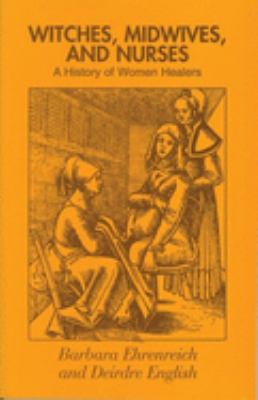
Witches, Midwives and Nurses


Read online version here


I hope to develop through this blog, a holistic understanding of health, our bodies, labor, gender and disabilities struggles. I feel like this pamphlet is exactly the kind of foundational texts that need to be made more accessible in our time. Non-institutionalized, accessible, community run healthcare is not the terrain of new age-y, white, middle class hippies. It is the terrain of women of color, of class struggle, of gender struggle that had been severely attacked historically. I feel like it's time to reclaim, normalize and integrate it into my life and politics.

Commodified care expresses how caring work (which involves love, support, skilled labor etc) has been turned into capitalist properties for the purpose of $$ and not for the purpose of furthering and expanding humanity. It takes the form of disableism, racism and patriarchy in that some bodies are more commodified than others, both as bodies which are seen as useless and therefore suitable only as OBJECTS that can gain profits, or as bodies that are not flesh and blood, but rather machines that can be sped up endlessly. 

The foundation of commodified care is that it separates our physical bodies from our mental and emotional health. Like so many things, it is a product of extreme rationalism, Enlightenment philosophy gone sour, which institutionalizes the mind-body split. This mind-body split is also expressed in classed, gendered and bodily ways -- the elite, the male and the able-bodied cisgendered male is seen as the pedestal of rationalism while the poor, women and gender non-conforming folks, disabled bodies are lacking and more controlled by our primitive, bodily needs. Fixing is what we need, in bodily and mental forms -- thus invasive medical procedures and indoctrinating education that devalue us in our own eyes. On a more everyday level, it is how at my workplace, CNAs are expected to do the servant-like menial labor, do the daily grooming and dressing, but not be trained in medical skills or be given time/space in our workday to BUILD relationships with our residents. This is not to say that relationships dont form between us and our residents, but that they form because of the resilience of relationships and love, not because they had been accounted for as an integral dimension of the caring work that we do. 

What I am most excited about by this pamphlet is its description of the Popular Health Movement, as opposed to the "Feminist" movement led by white, middle class Victorian ladies. The Popular Health Movement involved the widespread dissemination of knowledge about herbal medicine, preventative care, and expertise about the body and hygiene, as opposed to the elitism and isolation of doctors, the professionalized medical establishment.
[To continue, read here]