2 things
1) Alot of people say queer theory is academic and inaccessible to the working class, and then write it off. However, the distinctions b/w sex, gender and sexuality are important concepts that do indeed also describe the experiences of working class people. I am wary of those who class bait queer theory as a way to not deal with the need for queer liberation within the working class. In fact, this kind of argument fall into the same old economist debates about the working class, that theory is for the academic/middle class, while struggle and "literature for workers" is for the working class. Part of what our project is, is to say we need working class militants and theorists. Queer theory is one of these theories that need to be reclaimed, just like Lenin, Marx, and Gramsci are theories that the working class needs to muster.
2) Ultimately, when theory describes an extremely personal and also social process such as gender, sexuality and sex, what is most important is how people are approaching the discussion, rather than the name-dropping of queer theory. This reminds me of what Michelle O Brien describes in her piece, that the fancy academics and yuppies who name drop about trans and queer theory sometimes turn out to be the most arrogant and pretentious, while those who dont know the jargon, but approach trans and queer peoples' experiences with a genuine desire to learn and understand, are the most valuable allies to have. It is this openness and genuine interest/vulnerability/unguardedness that paved the way for the queer-straight unity in the Welsh Miners Strike. I see one of my tasks as a revolutionary queer worker, to be one that nurtures and facilitates such openness with my coworkers through class struggle.
Queer liberation is a form of dialectical growth. It is not a static category. In the 1970s, Sylvia Rivera, one of the most important and dopest trans liberation activist in recent history, could not be named. As a drag queen, she existed lost in the binary b/w gay and lesbian, straight and gay. Today, as trans historians and activists like Susan Stryker, Leslie Feinberg, Joan Nestle, etc write the distinct narrative of the history of trans liberation, reclaiming Stonewall from middle class gay scenes, calling out the transphobia of the 2nd wave feminists, recognizing the Compton cafe riot as a definitive historical event for trans people, we now see Sylvia Rivera as a definitive figure of trans peoples history. What is unnamed today, is part of a birthing of a new historical, cultural, material experience, that can only be named tomorrow, later, after many pioneers have put their lives down.
My point was...this dialectical unfolding requires an open state of mind. This open state of mind is what Michelle O Brien describes, as the genuine, humbled experience of listening and understanding what another experiences in their relationships to sex, gender and sexuality, how their personal identities form through all our interactions with society, within ourselves etc. It is not born out of name-dropping queer theory jargon or Judith Butler-esque language. That said, note that I am not throwing out the insight that folks like Judith Butler and Foucault have made. Just that their academic theories are not the sole factors in shaping the new category of queer liberation, and should not monopolize queer liberation. We need to emphasize that the personal struggles and search for liberation of many individuals are part of the unfolding of the queer dialectic.
I hope this makes sense.
Toward a free and joyous expression of self!
Showing posts with label queer. Show all posts
Showing posts with label queer. Show all posts
Wednesday, June 22, 2011

Sunday, December 5, 2010
the Detachable Pussy
I love wanda sykes, except when she gets into her islamophobia, anti-Muslim, American chauvinsim diatribes.
she needs a lesson in Malcom X pan-Africanism and Black Power.
that said, I love love love this skit: The Detachable Pussy.
watching it earlier this year reminded me of my early consciousness of my body.
my first inkling and knowledge of my sexual organs came not from joy, or knowledge of their pleasure, but from the what had been drummed into me from a young age, that they would be taken away from me, without my permission.
age 10, my first awareness of women's particular oppression as a group, came from my knowledge of comfort women and the history of japanese militarism and rape in southeast asia, rape as ethnic genocide, rape as torture. so much so i would rehearse this scenario in my mind, where i would be forced to choose between being raped and not snitching, or snitching to rescue my pussy, and my body, and betraying my people.
now, i realize it was a false choice to begin with. women never not get raped in war. women never have a choice under a patriarchal militaristic invasion.
but i rehearsed this choice in my head every time i watched these 9pm drama series, which ended promptly at 10pm, so i could be tucked nicely into bed, ready for school the next day. ready to belt out our national anthem at 7.20am sharp with my other country mates.
"i will accept rape, and survive rape before i will ever let the japanese military murder my people."
this was often what i told myself, echoing the messages these nationalist dramas conveyed.
but the nation betrayed me.
it never sought my liberation. in nationalist feminist drama, the woman always dies. the woman always becomes a martyr, leaving the good sturdy men to continue the legacy of the nation.
i dont wanna be a martyr. i want to be a survivor and a builder. there is no long-term process of learning, growth, challenges in sensationalized grand moments of martyrdom and sacrifice. i want to live to learn, to build relationships, to endure and pick myself up after the fall, not die grandly to be part of a forgotten memory. i want my liberation to be part of all of our liberations. i dont want to sacrifice. enough of that self-negating bullshit.
i dont want to be loyal for the sake of an image of the preservation of "my people," "my nation," especially not when they dont reciprocate the love and trust.
this post is a little abstract.a lot of stuff is happening in my life these days. i am trying to externalize, not internalize and let pain, anger and suffering monopolize my mental space. i want to be free as i struggle, i want to save room and make space for self-transformation as i struggle, not let past pains, betrayals and anger engulf me, capture me, suffocate me, so much so that i can't grasp and appreciate the beauty of the invading socialist society i feel i experience everyday at work.
i dont know how or why, but these were some of the feelings that came to me when i first watched wanda syke's skit.
if you feel comfortable sharing, i wanna know what came up for you too.
enjoy:
she needs a lesson in Malcom X pan-Africanism and Black Power.
that said, I love love love this skit: The Detachable Pussy.
watching it earlier this year reminded me of my early consciousness of my body.
my first inkling and knowledge of my sexual organs came not from joy, or knowledge of their pleasure, but from the what had been drummed into me from a young age, that they would be taken away from me, without my permission.
age 10, my first awareness of women's particular oppression as a group, came from my knowledge of comfort women and the history of japanese militarism and rape in southeast asia, rape as ethnic genocide, rape as torture. so much so i would rehearse this scenario in my mind, where i would be forced to choose between being raped and not snitching, or snitching to rescue my pussy, and my body, and betraying my people.
now, i realize it was a false choice to begin with. women never not get raped in war. women never have a choice under a patriarchal militaristic invasion.
but i rehearsed this choice in my head every time i watched these 9pm drama series, which ended promptly at 10pm, so i could be tucked nicely into bed, ready for school the next day. ready to belt out our national anthem at 7.20am sharp with my other country mates.
"i will accept rape, and survive rape before i will ever let the japanese military murder my people."
this was often what i told myself, echoing the messages these nationalist dramas conveyed.
but the nation betrayed me.
it never sought my liberation. in nationalist feminist drama, the woman always dies. the woman always becomes a martyr, leaving the good sturdy men to continue the legacy of the nation.
i dont wanna be a martyr. i want to be a survivor and a builder. there is no long-term process of learning, growth, challenges in sensationalized grand moments of martyrdom and sacrifice. i want to live to learn, to build relationships, to endure and pick myself up after the fall, not die grandly to be part of a forgotten memory. i want my liberation to be part of all of our liberations. i dont want to sacrifice. enough of that self-negating bullshit.
i dont want to be loyal for the sake of an image of the preservation of "my people," "my nation," especially not when they dont reciprocate the love and trust.
this post is a little abstract.a lot of stuff is happening in my life these days. i am trying to externalize, not internalize and let pain, anger and suffering monopolize my mental space. i want to be free as i struggle, i want to save room and make space for self-transformation as i struggle, not let past pains, betrayals and anger engulf me, capture me, suffocate me, so much so that i can't grasp and appreciate the beauty of the invading socialist society i feel i experience everyday at work.
i dont know how or why, but these were some of the feelings that came to me when i first watched wanda syke's skit.
if you feel comfortable sharing, i wanna know what came up for you too.
enjoy:
Thursday, December 2, 2010
my pussy is not for you to maim, or claim. it belongs to me.
the past week, i could not stop thinking about gender, sexuality and me. i have been meaning to write about this in a more coherent way, but can't manage. i am sick of confessionals -- women, queers, transfolks, people of color, being expected to write out their heart, rewind back to past traumas, pains, and survival, just to make a point to an injurious, hurtful world. to say to this world that no, actually you did get it wrong and here's why. to claim, and reclaim my voice is important. but some things i want to forget and start anew on. some things i dont want to keep reliving cos they are painful. i am tired of flashbacks because each flashback actually brings me back and it's taken so long to forgive myself for hurting myself and allowing others to hurt me. so dear world, why do you insist on digging through years of scab, scraping dead skin, exposing these wounds, just to have them be raw, raw, raw to the elements?
last week i hung out with folks who once, had been a part of my community. they were a part of a community that i built with trusted friends. it was not an explicitly political community, deliberately so cos we shared many different politics, but it was a somewhat safe space. we relived immigrant experiences, family drama, and nostalgia for our pasts, miles and years away. we were a bunch of queers, lesbians and straight folks who laughed together, watched movies together, and got drunk and high together.
but since then 2 precious people in my life, with whom i shared this community, have left the city to pursue new dreams. what i did not know, was that the safety and joy i felt in this community we built together, left with them.
last week i hung out w some friends, and got introduced in an abrupt way, to the stockholm syndrome.
the stockholm syndrome refers to a psychological phenomenon where hostages (people who are oppressed) begin to identify with their kidnapper (the oppressor) and defends them. there is a lot of psychoanalysis on these hostages loss of their sense of self, becoming "protectionist" so to speak, of their oppressors.
Seriously?
In addition to this, there was a whole lot of sarcasm and disdain of queers -- like: who would want to identify as a "bi-dyke? that's just weird!" or, "there are a lot of those queers around," followed by sniggers and laughter.
The totality of my experiences around gender identity and sexuality, of me coming to my own in my skin, of being born "woman" but not being of "Woman" in this patriarchal, gender-binaried society, of not knowing what to do with myself, with my body, in those angst-y teenage years when puberty seemed to pass me by, when i walked into stores with friends not knowing what to do cos those styles dont fit, neither do those sizes, of me struggling with being in love with a woman, almost stalking her, calling her, writing love notes to her and being told everyday that i would get over it but then even 3 years after that as a teenager, still wondering what this "phase" meant, of me wanting more but fearing where this 'more' would take me, of me coming out to myself on a plane-ride home, admitting to myself that those moments when i massaged her with thumb kneading into skin, those moments were love moments, desire-moments; and me coming to terms with love, that my loves do not fit into labels and boxes, that my love for this cisboy doesnt make me less, or more. it's just love that reciprocates, that is honest, that is desire, that is bodily and expansive, that is growth, that doesnt force me to deny the other loves and desires in my life. this is me. me, who is neither of the males, or of the females. me, who is queer not because i wanna claim your lesbian experience, but because there is no other term that makes sense for me, no other term that lets the edges of me stick out of boxes, quirky but not awkward. just me. You call me, and my trials, my tribulations, a fucking "stockholm syndrome?"
who, the fuck, are you?
today, i have a pussy. i love the sensations i get through this body organ. but, i dont particularly identify with this organ. i definitely dont detest it! but neither am i absolutely crazy over it. it is not central to my gender expression, to my daily living. it is a bodily organ to me that brings me a lot of joy, and allows me to share with my lover. at other times, it prompts me to reflect and question myself cos it shuts down, for good reasons. and for a long time, witnessing and experiencing domestic violence made me think pussy-love=vulnerability=beatings/anger/violence and for a long time, this organ was not of reach, out of touch, out of sync. but today, i found myself and can reach deep down with less fear.
you, lesbian separatist, wants to tell me that you know where my pussy should be, more than i do.
i am sick of people politicizing my body, objectifying it like they know more than me how it should look like, which way it should be penetrated, which race it should breed.
whether they are nationalists, lesbian separatists, patriarchal men or transphobic shitheads. this is it:
get off me.
let me be me.
today i have a pussy, and maybe tomorrow i wont.
and you know what? i dont feel particularly distressed about this uncertainty.
neither should you.
last week i hung out with folks who once, had been a part of my community. they were a part of a community that i built with trusted friends. it was not an explicitly political community, deliberately so cos we shared many different politics, but it was a somewhat safe space. we relived immigrant experiences, family drama, and nostalgia for our pasts, miles and years away. we were a bunch of queers, lesbians and straight folks who laughed together, watched movies together, and got drunk and high together.
but since then 2 precious people in my life, with whom i shared this community, have left the city to pursue new dreams. what i did not know, was that the safety and joy i felt in this community we built together, left with them.
last week i hung out w some friends, and got introduced in an abrupt way, to the stockholm syndrome.
the stockholm syndrome refers to a psychological phenomenon where hostages (people who are oppressed) begin to identify with their kidnapper (the oppressor) and defends them. there is a lot of psychoanalysis on these hostages loss of their sense of self, becoming "protectionist" so to speak, of their oppressors.
K., who used to identify as queer but is now presumably a lesbian separatist, asked me;
K: How is your relationship with M going?
Me: Very good. I have been going through a hard time and he's been very supportive.
K: Have you heard of the Stockholm Syndrome?
Me: No, what is it?
K: You should read it. It explains a lot of things in all our lives.*M is my partner. He is cis male.
Seriously?
In addition to this, there was a whole lot of sarcasm and disdain of queers -- like: who would want to identify as a "bi-dyke? that's just weird!" or, "there are a lot of those queers around," followed by sniggers and laughter.
The totality of my experiences around gender identity and sexuality, of me coming to my own in my skin, of being born "woman" but not being of "Woman" in this patriarchal, gender-binaried society, of not knowing what to do with myself, with my body, in those angst-y teenage years when puberty seemed to pass me by, when i walked into stores with friends not knowing what to do cos those styles dont fit, neither do those sizes, of me struggling with being in love with a woman, almost stalking her, calling her, writing love notes to her and being told everyday that i would get over it but then even 3 years after that as a teenager, still wondering what this "phase" meant, of me wanting more but fearing where this 'more' would take me, of me coming out to myself on a plane-ride home, admitting to myself that those moments when i massaged her with thumb kneading into skin, those moments were love moments, desire-moments; and me coming to terms with love, that my loves do not fit into labels and boxes, that my love for this cisboy doesnt make me less, or more. it's just love that reciprocates, that is honest, that is desire, that is bodily and expansive, that is growth, that doesnt force me to deny the other loves and desires in my life. this is me. me, who is neither of the males, or of the females. me, who is queer not because i wanna claim your lesbian experience, but because there is no other term that makes sense for me, no other term that lets the edges of me stick out of boxes, quirky but not awkward. just me. You call me, and my trials, my tribulations, a fucking "stockholm syndrome?"
who, the fuck, are you?
today, i have a pussy. i love the sensations i get through this body organ. but, i dont particularly identify with this organ. i definitely dont detest it! but neither am i absolutely crazy over it. it is not central to my gender expression, to my daily living. it is a bodily organ to me that brings me a lot of joy, and allows me to share with my lover. at other times, it prompts me to reflect and question myself cos it shuts down, for good reasons. and for a long time, witnessing and experiencing domestic violence made me think pussy-love=vulnerability=beatings/anger/violence and for a long time, this organ was not of reach, out of touch, out of sync. but today, i found myself and can reach deep down with less fear.
you, lesbian separatist, wants to tell me that you know where my pussy should be, more than i do.
i am sick of people politicizing my body, objectifying it like they know more than me how it should look like, which way it should be penetrated, which race it should breed.
whether they are nationalists, lesbian separatists, patriarchal men or transphobic shitheads. this is it:
get off me.
let me be me.
today i have a pussy, and maybe tomorrow i wont.
and you know what? i dont feel particularly distressed about this uncertainty.
neither should you.
Wednesday, November 17, 2010
Where do all the old queers go?
R and i have been talking about wanting to meet queers in the city who 1) aren't so deeply entrenched in the non-profit scene, and who 2) are, like us, a little less hot and fantabulous :) no, we are not demeaning ourselves (actually R is super hot and everyone knows it) and neither are we trying to say that attractive hot queers arent attractive, hot and fucking desirable! but the intention behind it for me at least, is to think about queerness and our lives as everyday lives, regular lives, not only super tragic, or out-of-life, or super dramatic, or super politicized, super out-of-the-world but also at times, are just like the lives of everyone else queer or non-queer-- just goddamn fucking real and hard like all lives in this world are.
and then all this talk about my job and the elderly, and thinking about how come folks rarely talk about elderly queer folks -- what happens to queers when everyone else has settled down to the nuclear family, when everyone gets kids and age into being grandparents always in anticipation of their cute bubbly grandkids coming to visit to bring joy and warmth to the hearth of the home. (not that this is ever real anyway, but that for many nuclear families, this is the idyllic vision/direction of aging; a map that is non-existent for many queers). when queers grow old, which non-blood families stay, which ones diminish, and, which nursing homes play the role of substitute family, or not?
it is a coincidence that R sent me this article about the an abandoned Stonewall militant, Storme DeLaverie. Back when Stonewall set streets on fire in NYC, Storme was a hardcore lesbian who socked NYPD in the face when they taunted her. She was known then as the "Stonewall Lesbian." Storme was also a drag king, genderqueer and mixed woman from the South who imaginably survive helllllaaa both as a mixed woman as well as a queer woman. Today, she is a nursing home, ward of the state, aging woman with dementia, with no blood family. Close friends want to claim her but find legal challenges. A Stonewall veteran, she was unable to attend the 2010 Pride cos the nursing home did not allow her to leave the home. Even the New York Times missed her.
Family.
Been thinking about family, especially after reading this piece that my friend sent me: "'It's like Family': Race and Gender in Nursing Homes." This piece is by 2 researchers/anthropologists who do a series of interviews with CNAs in Massachussets (predominantly Haitian immigrants), and analyze the rhetoric of the family that these nursing home employers utilize as they extract the caring labor from these CNAs and immigrants, some of whom, far from their own families, substitute the elderly residents they care for, for their elderly moms. Yet, as exploitation goes, the humane relations that emerge from this kind of labor is unreciprocated -- the wages are only one layer; the others: including not having the time to mourn for the elderly whom you have cared for because at the end o the day, your productivity matters more than the family values extracted out of you; is also only another dimension. Where does this contradiction go? In my life, it gets swallowed, it gets internalized, it gets pent up and absorbed into our person, not expressed as class struggle, not expressed as tough love breaking down obstacles in way of reciprocity.
When I first finished the piece, I started crying. Yes, super dramatic I know, but it's just cos I saw how other CNAs in this piece described exactly my workplace experience. I wrote an equally super dramatic post about this a few days ago but got embarrassed and deleted it. But why this piece hit me so hard is because it resonated completely with what I experience, and also because I am reminded again and again, how working class women, women of color, take up caring work and are seldom compensated or reciprocated. Caring work sounds abstract but what it is, is love, is vulnerability, is trust, is emotional reliance -- and in this patriarchal, capitalist world that seeks to exploit human sensitivity, these expressions hit a wall, a dead-end and are instead betrayed.
In the nursing home industrial complex, as the paper describes, expects CNAs to treat their residents like family, are expected to go over the top to treat the residents like their own parents, yet, are never reciprocated for their care and love by the nursing home corporation/institution -- workers are still not treated as fully human but as machines. The only humanity is the humanity of the workers toward the elderly and vice versa (when the latter dont break out into racist dementia, as the piece also documents).
So thinking about the ways that the notion of the "family" under capitalism has been exploited and manipulated to extract even more labor from women of color and working class women, to extract our compassion and humanity unreciprocally, and then this talk about queer elderly who dont have chosen families when they grow old, even when once upon a time Stonewall created a momentary family of resistance. What happened? Where did all the younger queers go? The persistence of capitalist notions of the "family," contrasted with the obstacles/temporality/forgetfulness of families that are born out of struggle, desire, choice, and love -- chosen families, queer families -- is a bit of a mind fuck.
and then all this talk about my job and the elderly, and thinking about how come folks rarely talk about elderly queer folks -- what happens to queers when everyone else has settled down to the nuclear family, when everyone gets kids and age into being grandparents always in anticipation of their cute bubbly grandkids coming to visit to bring joy and warmth to the hearth of the home. (not that this is ever real anyway, but that for many nuclear families, this is the idyllic vision/direction of aging; a map that is non-existent for many queers). when queers grow old, which non-blood families stay, which ones diminish, and, which nursing homes play the role of substitute family, or not?
it is a coincidence that R sent me this article about the an abandoned Stonewall militant, Storme DeLaverie. Back when Stonewall set streets on fire in NYC, Storme was a hardcore lesbian who socked NYPD in the face when they taunted her. She was known then as the "Stonewall Lesbian." Storme was also a drag king, genderqueer and mixed woman from the South who imaginably survive helllllaaa both as a mixed woman as well as a queer woman. Today, she is a nursing home, ward of the state, aging woman with dementia, with no blood family. Close friends want to claim her but find legal challenges. A Stonewall veteran, she was unable to attend the 2010 Pride cos the nursing home did not allow her to leave the home. Even the New York Times missed her.
Family.
Been thinking about family, especially after reading this piece that my friend sent me: "'It's like Family': Race and Gender in Nursing Homes." This piece is by 2 researchers/anthropologists who do a series of interviews with CNAs in Massachussets (predominantly Haitian immigrants), and analyze the rhetoric of the family that these nursing home employers utilize as they extract the caring labor from these CNAs and immigrants, some of whom, far from their own families, substitute the elderly residents they care for, for their elderly moms. Yet, as exploitation goes, the humane relations that emerge from this kind of labor is unreciprocated -- the wages are only one layer; the others: including not having the time to mourn for the elderly whom you have cared for because at the end o the day, your productivity matters more than the family values extracted out of you; is also only another dimension. Where does this contradiction go? In my life, it gets swallowed, it gets internalized, it gets pent up and absorbed into our person, not expressed as class struggle, not expressed as tough love breaking down obstacles in way of reciprocity.
When I first finished the piece, I started crying. Yes, super dramatic I know, but it's just cos I saw how other CNAs in this piece described exactly my workplace experience. I wrote an equally super dramatic post about this a few days ago but got embarrassed and deleted it. But why this piece hit me so hard is because it resonated completely with what I experience, and also because I am reminded again and again, how working class women, women of color, take up caring work and are seldom compensated or reciprocated. Caring work sounds abstract but what it is, is love, is vulnerability, is trust, is emotional reliance -- and in this patriarchal, capitalist world that seeks to exploit human sensitivity, these expressions hit a wall, a dead-end and are instead betrayed.
In the nursing home industrial complex, as the paper describes, expects CNAs to treat their residents like family, are expected to go over the top to treat the residents like their own parents, yet, are never reciprocated for their care and love by the nursing home corporation/institution -- workers are still not treated as fully human but as machines. The only humanity is the humanity of the workers toward the elderly and vice versa (when the latter dont break out into racist dementia, as the piece also documents).
So thinking about the ways that the notion of the "family" under capitalism has been exploited and manipulated to extract even more labor from women of color and working class women, to extract our compassion and humanity unreciprocally, and then this talk about queer elderly who dont have chosen families when they grow old, even when once upon a time Stonewall created a momentary family of resistance. What happened? Where did all the younger queers go? The persistence of capitalist notions of the "family," contrasted with the obstacles/temporality/forgetfulness of families that are born out of struggle, desire, choice, and love -- chosen families, queer families -- is a bit of a mind fuck.
In the NY Times piece on Storme DeLarverie, her friend says:
“I feel like the gay community could have really rallied, but they didn’t,” said Lisa Cannistraci, a longtime friend of Ms. DeLarverie’s who is the owner of the lesbian bar Henrietta Hudson, where Ms. DeLarverie worked as a bouncer.
“The young gays and lesbians today have never heard of her,” Ms. Cannistraci said, “and most of our activists are young. They’re in their 20s and early 30s. The community that’s familiar with her is dwindling.”If queers fought for the rights of our elderly in nursing homes, regenerating a sense of the chosen queer family, AND the rights of queer/non-queer workers being forced to conform to a capitalist/exploitative model of the hierarchical nuclear family at the workplace, freeing ALL WORKERS from the unreciprocal dynamics of extracted, commodified family values, that would be a fucking amazing queer liberation, disabilities class struggle!!!
Tuesday, November 2, 2010
Witches, Midwives and Nurses
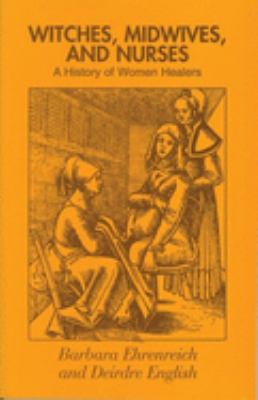
Read online version here
I hope to develop through this blog, a holistic understanding of health, our bodies, labor, gender and disabilities struggles. I feel like this pamphlet is exactly the kind of foundational texts that need to be made more accessible in our time. Non-institutionalized, accessible, community run healthcare is not the terrain of new age-y, white, middle class hippies. It is the terrain of women of color, of class struggle, of gender struggle that had been severely attacked historically. I feel like it's time to reclaim, normalize and integrate it into my life and politics.
Commodified care expresses how caring work (which involves love, support, skilled labor etc) has been turned into capitalist properties for the purpose of $$ and not for the purpose of furthering and expanding humanity. It takes the form of disableism, racism and patriarchy in that some bodies are more commodified than others, both as bodies which are seen as useless and therefore suitable only as OBJECTS that can gain profits, or as bodies that are not flesh and blood, but rather machines that can be sped up endlessly.
The foundation of commodified care is that it separates our physical bodies from our mental and emotional health. Like so many things, it is a product of extreme rationalism, Enlightenment philosophy gone sour, which institutionalizes the mind-body split. This mind-body split is also expressed in classed, gendered and bodily ways -- the elite, the male and the able-bodied cisgendered male is seen as the pedestal of rationalism while the poor, women and gender non-conforming folks, disabled bodies are lacking and more controlled by our primitive, bodily needs. Fixing is what we need, in bodily and mental forms -- thus invasive medical procedures and indoctrinating education that devalue us in our own eyes. On a more everyday level, it is how at my workplace, CNAs are expected to do the servant-like menial labor, do the daily grooming and dressing, but not be trained in medical skills or be given time/space in our workday to BUILD relationships with our residents. This is not to say that relationships dont form between us and our residents, but that they form because of the resilience of relationships and love, not because they had been accounted for as an integral dimension of the caring work that we do.
What I am most excited about by this pamphlet is its description of the Popular Health Movement, as opposed to the "Feminist" movement led by white, middle class Victorian ladies. The Popular Health Movement involved the widespread dissemination of knowledge about herbal medicine, preventative care, and expertise about the body and hygiene, as opposed to the elitism and isolation of doctors, the professionalized medical establishment.
[To continue, read here]
[To continue, read here]
Subscribe to:
Posts (Atom)