Showing posts with label popular health. Show all posts
Showing posts with label popular health. Show all posts
Saturday, April 2, 2011
赤脚医生 China's Barefoot Doctors
"Barefoot Doctors of Rural China" by Diane Li
I am part of an experimental, emerging group of healthcare workers/folks interested in being healthcare workers, meeting monthly to develop praxis around disabilities justice, class struggle and healthcare.
Eventually, *with fingers crossed* we can hopefully facilitate an emergence of a network of rank and file, industry- wide healthcare workers collective in Seattle.
We have developed an ongoing database of readings around healthcare here. If folks have any suggestions, or recommendations, please let me know. I have been reading some pieces during my free time, but not in any structured way. Most recently, I have been trying to tackle Ivan Illich's Medical Nemesis. It is a challenging piece to read, exciting in its outright criticism of the capitalist medical bureaucracy yet also somewhat disturbing the strains of anti-modernism. When, or if, I ever finish the piece, I will attempt a review.
Just today, I watched a short documentary by US AID about barefoot doctors in rural China, back in 1975. Barefoot doctors are doctors that are recruited from the rural areas to be trained in preventative and primary care skills. They served as the first line of medical expertise for people in rural China, who then made up 80% of China's population. There are certain interesting features about barefoot doctors from this documentary that I think are useful to think about as we imagine alternatives to the form of healthcare we have available in this country. All my observations are from watching this documentary and so, not super well researched!
First off, the barefoot doctors as described in the film, are nominated from the community. They are nominated in open meetings in rural communities and then approved by the local Health Board, subsequently trained for 3 -6 months, accumulating in 2 year training period broken up into phases. The trainings include knowledge of traditional chinese medicine and western medicine, and more importantly preventative and curative methods for local diseases and illnesses, specific to the communities that the barefoot doctors come from. Those who are interested, or talented, could get further training as full-time physicians in the cities. The barefoot doctor positions were predominantly women, making up more than 50% in some cases, and provided a role for women as healers and skilled labor in their communities.
The idea that doctors and healthcare workers need to be nominated and chosen from the community, I think is a very important concept. It assures their accountability to the communities that they serve. Today our doctors and healthcare providers are so distant, cold, functional and unaccountable. The legal system or the state steps in to try to assure accountability in their own fucked up and pretentious ways. Having doctors from communities who can be nominated out of their positions, I think creates a more effective system of ensuring that doctors serve the health of the people and begins a dialogue about how the structures of health provision and healthcare should be a communal effort, not simply based on individual morals and personality. Today, the Hippocratic Oath doesnt mean anything because doctors are out there just to get money and nothing holds them to that oath, except if you have the money and time to fight a huge, long, drawn out court case around doctor accountability...
Furthermore, barefoot doctors were not separated from their communities. It was seen as a role that was complementary with being a farmer or a housewife. In the film, the narrator talks about how farmers would work 40% of the time in the fields, and then serve their time as barefoot doctors for 60% of the time, and be paid the same wages for both kinds of work. This seems like a way to break down the mental manual labor divisions. In their work, the barefoot doctors were responsible for going around the community, being mobile, to treat and talk to members of the community. They had a somewhat more holistic vision of healthcare that didnt focus simply on medication. It also included teaching classes on sanitation, on the safekeeping of human manure for fertilizers, for replacing human manure with pig manure as safer options, and also conducted sessions where the community would come together to clear up clogged drains which were breeding grounds for dangerous mosquitoes and diseases. In addition, they were responsible for testing the levels of sanitation of well water.
The film also highlighted how the medication that was used in the barefoot doctor clinics were both a combination of indigenous, traditional chinese medicine (TCM), as well as western medicine and patients had the option to decide what kind of treatment they preferred. In the clinic backyards, the doctors would grow plots of herb that they would grind up as medication, and also offer community members payments for bringing in wild herbs which were rare or potent. People would make extra cash this way.
When it came to payment, the community would pool together money -- everyone had a small amount extracted from their "workpoints" or wages, and it would be pooled together to pay the barefoot doctor and the supplies. It was a form of Cooperative Insurance Fund which would be matched by the state. It seemed as if once people contributed to the fund, they would have access to whatever service and treatment they needed.
Having just discussed Critique of the Gotha Program with some of my comrades here, I think it is interesting to think about whether the kind of cooperative that existed was something that defied the law of value and decommodification of healthcare, or whether it also continued to uphold the law of value in more masked forms, under state capitalism.
The film presents the barefoot doctor system as a top down effort by the state capitalist regime, though I am skeptical of that. The way barefoot doctors are described in the film seems to me the way doctors/physicians have been presented in the traditional period drama I have seen before -- they were itinerant, worked also with their hands and not merely with their minds, and were also scientists of sorts. In any case, I wonder if the communications and interactions among barefoot doctors of different provinces and regions were facilitated by the state, or if they recognized themselves as a group of skilled workers who got each others' backs, a class by themselves.
I have been very interested in the state socialist feminism of the Chinese Communist Party and have a lot to say about it, and probably will in another post. On a side note, there is a documentary that I really love, called Out of Phoenix Bridge 回到凤凰桥, that describes the experiences of some rural Chinese women in present-day (well, 1997) Beijing who are there as migrant factory workers. It chronicles some of this history of state socialist feminism that the CCP imposed, and some of its strengths and weaknesses, and its presentation of women as productive capitalist workers who "hold up half the sky" but essentially a betrayal of the interests and liberations of many individual women.
Barefoot doctors in CCP China played a role where women could defeat the feudal forms of patriarchy that existed then, that oppressed and exploited women intensely, and provided a state-recognized role for women to play, where they were doctors and skilled workers. However, at the same time, that went hand in hand with an intense control of women's sexuality under the pretext of nation-building.
The film describes how the barefoot doctors had sole monopoly over access to birth control methods like condoms and pills, which they would only give to married couples. To these married couples they would hold sessions on birth control. In fact, the barefoot doctors would have records of the birth control methods that families in their communities utilized, and would check in on the usage. At some point, health and safety precautions become a pretext for state control over reproductivity and sexuality. They would also hold sessions on sexually transmitted infections (STI) and apparently China during that time did not have cases of gonorrhea and syphillis. I imagine though the darker side of this was the intense persecution of sex workers, whether they be in rural or urban areas. In addition, during the time when the One-Child policy was imposed, women who worked in the fields and factories where barefoot doctors serviced, would have their menstrual cycles be tracked by the doctors and be called in to take their birth control pills as assigned.
That, sounds a little freaky.
I recommend this 50 min long documentary! For good and for bad, it helps me think through what alternatives we need to build for healthcare!

Tuesday, November 16, 2010
Models of from-below healthcare: Lincoln Hospital Takeover
A slow work-in-progress of surveying/understanding various models of healthcare. Not enough time to go in depth now. Hope is that in a few months I can see this as part of a broader picture.
Thanks cg for forwarding some of these links. Anyone else, send me what you got!:)
For now, are some links on the Lincoln Hospital Takeover by the Young Lords in NYC back in the day.

- excerpt from The Puerto Rican Movement: Voices from the Diaspora (see chapter by Iris Morales) here
- The Young Lords Ten Point Program
-The Health Initiatives of the Young Lords Party: How a group of 1960s radicals made healthcare a revolutionary concern [16 pages]
-The Health Initiatives of the Young Lords Party: How a group of 1960s radicals made healthcare a revolutionary concern [16 pages]
This is the same organization that my favorite queer revolutionary, Sylvia Rivera, was a part of. She was a transwoman activist with strong class and race politics, forefronting transliberation struggles at a time when it was invisibilized by the anti-trans gay and lesbian, as well as 2nd wave feminist politics.
Some things that stand out from the 10-point program (posted below)
* Community control over health services
* Community control over hiring and firing at hospital
* Collaboration with medical students (see excerpt description)
* Employment in hospitals
* Free healthcare
* door-to-door health services: bringing healthcare to the people
* Education
* alliance b/w unions/employed people and unemployed through agreement to provision of services and community control
The Lincoln offensive was triggered by the death of a young Puerto Rican woman who had a botched abortion procedure in the hospital. This had great impact on the way the Young Lords took up reproductive rights with the leadership (through struggle!) of women leaders.
3 major ways to reclaim healthcare for community; seeing healthcare as working class issue:
Lead Offensive
TB Offensive
Lincoln Offensive
Organization that was set up: Health Revolutionary Union Movement (HRUM) was influenced by DRUMS in Detroit -- League of Revolutionary Black Workers; HRUM set up by hospital workers of color who saw their labor struggles and struggles in healthcare as part of broader working class struggles (amazing!!)
Conducted direct action to make city more responsive to healthcare needs of poor; community control of such services
Young Lords
Ten-Point Health Program
Ten-Point Health Program
1. We want total self-determination of all health services through an incorporated Community-Staff Governing Board for the Hospital. (Staff is anyone and everyone working at the hospital.)
2. We want immediate replacement of all government administrators by community and staff appointed people whose practice has demonstrated their commitment to serve our poor community.
3. We demand an immediate end to construction of the new emergency room until the Hospital Community-Staff Governing Board inspects and approves them or authorizes new plans.
4. We want employment for our people. All jobs must be filled by community residents first, using on-the-job training and other educational opportunities as basis for service and promotion.
5. We want free publicly supported health care for treatment and prevention. We want an end to all fees.
6. We want total decentralization--block health officers responsible to the community-staff board should be instituted.
7. We want "door-to-door" preventive health services emphasizing environment and sanitation control, nutrition, drug addiction, maternal and child care, and senior citizen services.
8. We want education programs for all the people to expose health problems --sanitation, rats, poor housing, malnutrition, police brutality, pollution, and other forms of oppression.
9. We want total control by the community-staff governing board of the budget allocations, medical policy along the above points, hiring, firing, and salaries of employees, construction and health code enforcement.
10. Any community, union, or workers organization must support all the points of this program and work and fight for that or be shown as what they are--enemies of poor people.
Tuesday, November 2, 2010
Witches, Midwives and Nurses
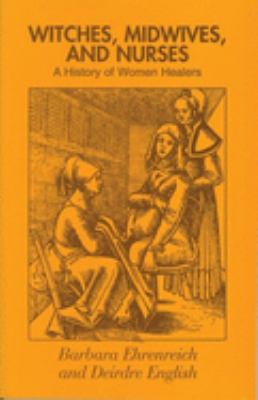
Read online version here
I hope to develop through this blog, a holistic understanding of health, our bodies, labor, gender and disabilities struggles. I feel like this pamphlet is exactly the kind of foundational texts that need to be made more accessible in our time. Non-institutionalized, accessible, community run healthcare is not the terrain of new age-y, white, middle class hippies. It is the terrain of women of color, of class struggle, of gender struggle that had been severely attacked historically. I feel like it's time to reclaim, normalize and integrate it into my life and politics.
Commodified care expresses how caring work (which involves love, support, skilled labor etc) has been turned into capitalist properties for the purpose of $$ and not for the purpose of furthering and expanding humanity. It takes the form of disableism, racism and patriarchy in that some bodies are more commodified than others, both as bodies which are seen as useless and therefore suitable only as OBJECTS that can gain profits, or as bodies that are not flesh and blood, but rather machines that can be sped up endlessly.
The foundation of commodified care is that it separates our physical bodies from our mental and emotional health. Like so many things, it is a product of extreme rationalism, Enlightenment philosophy gone sour, which institutionalizes the mind-body split. This mind-body split is also expressed in classed, gendered and bodily ways -- the elite, the male and the able-bodied cisgendered male is seen as the pedestal of rationalism while the poor, women and gender non-conforming folks, disabled bodies are lacking and more controlled by our primitive, bodily needs. Fixing is what we need, in bodily and mental forms -- thus invasive medical procedures and indoctrinating education that devalue us in our own eyes. On a more everyday level, it is how at my workplace, CNAs are expected to do the servant-like menial labor, do the daily grooming and dressing, but not be trained in medical skills or be given time/space in our workday to BUILD relationships with our residents. This is not to say that relationships dont form between us and our residents, but that they form because of the resilience of relationships and love, not because they had been accounted for as an integral dimension of the caring work that we do.
What I am most excited about by this pamphlet is its description of the Popular Health Movement, as opposed to the "Feminist" movement led by white, middle class Victorian ladies. The Popular Health Movement involved the widespread dissemination of knowledge about herbal medicine, preventative care, and expertise about the body and hygiene, as opposed to the elitism and isolation of doctors, the professionalized medical establishment.
[To continue, read here]
[To continue, read here]
Subscribe to:
Posts (Atom)